

Table of Contents
How to plan your trip to Chile
Chile one of those countries people dream about but rarely know how to plan properly.
Stretching from the driest desert on Earth to the icy peaks of Patagonia, it’s a destination of extremes, and that’s exactly what makes it both exciting and overwhelming. How long do you need? Where should you prioritise? And can you really fit it all into one trip?
This itinerary is designed to answer those questions — helping you experience Chile’s highlights without burning out. Over 11 days, you’ll move from vibrant cities to surreal landscapes, with thoughtful hotel and restaurant recommendations along the way to make the journey feel seamless rather than stressful.
Why choose the Atacama Desert, Arica and Patagonia National Park
Chile is vast, and trying to see everything in one trip usually means seeing very little properly. We chose Atacama Desert, Arica, and Patagonia National Park because together they show Chile at its most dramatic – north to south – without constant rushing.
Atacama Desert: maximum impact, minimal travel fatigue
The Atacama is one of the most visually striking places in South America. Salt flats, geysers, lagoons and world-class night skies are all within easy reach, meaning every day feels different without long drives. It’s ideal for first-time visitors who want unforgettable landscapes without overcomplicating logistics.
Arica: culture, coast and breathing space
Arica adds balance. Often overlooked, it offers a slower pace, strong local identity and a mix of desert and ocean that feels very different from the rest of Chile. Including Arica gives context to the north of the country and a welcome pause between bigger, headline destinations.
Patagonia National Park: wild Patagonia, fewer crowds
Patagonia was essential – but Patagonia National Park offers a quieter, more immersive experience than some of the better-known areas. Expect vast open landscapes, wildlife, and hiking without the pressure of peak-season crowds. It’s Patagonia at its most raw and rewarding.
Why this combination works
Instead of trying to see everything, this route focuses on contrast: extreme desert, coastal culture, and remote wilderness. It keeps travel realistic, avoids burnout, and still delivers a deep sense of Chile’s scale and diversity – leaving you time to actually enjoy where you are.
This blog post contains trusted affiliate links, which could earn me a small commission, at no extra cost to you. Thank you for your support.
Chile: 11 Day Itinerary
Day 1: Arrival in Santiago
Santiago, the vibrant capital of Chile, is a dynamic metropolis nestled in a valley surrounded by the majestic Andes Mountains. As the cultural, political, and economic heart of the country, Santiago offers a rich tapestry of experiences that blend modern urban life with historical charm.
Hotel: Hotel Plaza San Francisco
Stay at the Hotel Plaza San Francisco, located centrally with easy access to major attractions.
Dine at Bocanariz for a great introduction to Chilean cuisine with an extensive wine list.
Day 2: Exploring Santiago
Santiago is one of those cities that grows on you. At first glance it can feel busy and sprawling, but give it a little time and it really starts to shine, especially once you dig into its neighbourhoods. Start in the historic centre around Plaza de Armas, where the city’s colonial past is still very much on show, then pop into the Museo Chileno de Arte Precolombino for a brilliant introduction to Chile’s ancient cultures.
From there, head to Bellavista, one of Santiago’s most colourful and characterful areas. This is where you’ll find street art on almost every corner, buzzing bars and restaurants, and La Chascona, the former home of Pablo Neruda. Even if you’re not a poetry lover, it’s a fascinating glimpse into one of Chile’s most famous figures.
Food is a huge part of getting to know Santiago, and it’s a great place to ease yourself into Chilean cuisine. Wander through La Vega Central to see everyday Santiago life in action – colourful produce, seafood stalls, and plenty of controlled chaos. If you’re in the mood for something more polished, Santiago’s restaurant scene punches well above its weight, with everything from traditional favourites to cutting-edge dining.
Make time for the classics too. Visit La Moneda Palace, then head up Cerro San Cristóbal for panoramic views across the city to the Andes, especially beautiful on a clear day.
For lunch, Liguria is a great shout. It’s a long-standing local favourite with a relaxed, lively atmosphere, classic Chilean dishes, and a crowd that feels very much like Santiago itself. It’s the kind of place where lunch turns into a longer stop than planned, always a good sign.
Day 3: Fly to Calama and Transfer to San Pedro de Atacama
San Pedro de Atacama has a way of completely disarming you. It’s a small desert town, but arriving here – especially by air – gives you an immediate sense of just how dramatic this part of Chile is. As the plane descends, the Andes stretch out below you, layer upon layer of mountains and desert, setting the tone before you’ve even landed.
San Pedro de Atacama itself is small, charming and very walkable. Think dusty streets, low adobe buildings and lots of little shops and cafés catering to travellers passing through. It’s an easy place to pick up anything you’ve forgotten (if you’re anything like me!) – hats, gloves, sunscreen or extra layers – and to wind down in the evenings after a day out in the desert.
Fun fact: the Atacama’s otherworldly landscapes were even used in the final scenes of the Bond movie Quantum of Solace.
Where to stay: La Casa de Don Tomás
La Casa de Don Tomás is a great base in San Pedro. It has a relaxed, rustic desert feel and sits just a short walk from the town’s main streets, making it easy to pop out for dinner or a coffee. It’s simple, comfortable, and perfectly in tune with its surroundings, exactly what you want after long days exploring the desert.
Day 4: Atacama Desert
Visit Valle de la Luna (Valley of the Moon) and Valle de la Muerte (Valley of Death) – two of Chile’s most extraordinary natural landscapes.
Located roughly 2 km from San Pedro de Atacama, the Valley of the Moon, as the name suggests, offers visitors an extraordinary lunar landscape. Best combined with a trip to Death Valley next door along the Salt Mountain Range.
Whether you’re an adventure seeker, a nature lover, or a photography enthusiast, these Martian-like valleys provide an unforgettable experience that showcases the raw and rugged beauty of the Atacama Desert.
Dinner at Adobe in San Pedro de Atacama, known for its traditional dishes.
Day 5: El Tatio Geysers
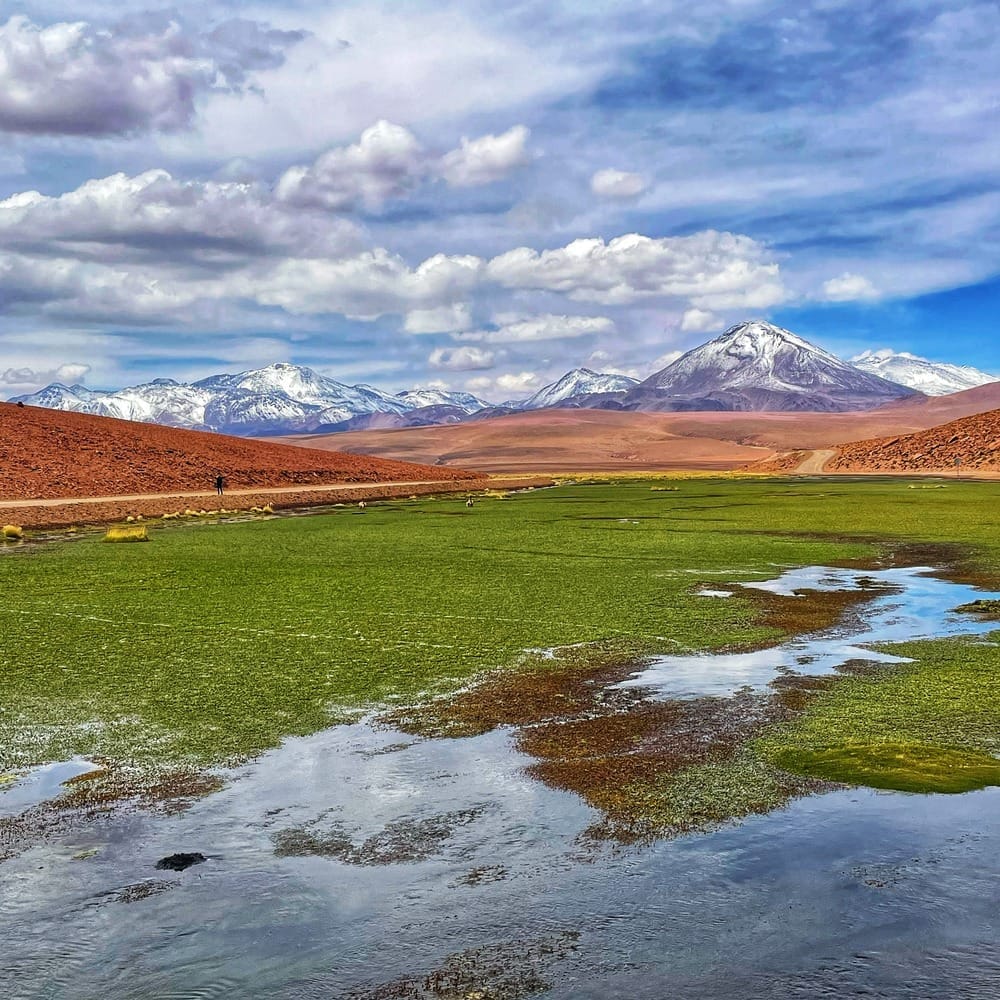
Leave before dawn to catch the sunrise at the El Tatio Geysers, among the highest-altitude geyser fields in the world. Situated at over 4,300 meters (14,000 feet) above sea level, this geothermal field boasts more than 80 active geysers, fumaroles, and hot springs.
The best time to visit El Tatio Geysers is at sunrise. Leaving early in the morning allows you to arrive just as the sun rises over the Andes Mountains, casting a golden light on the steaming geysers. The combination of the cold morning air and the rising sun enhances the visibility of the steam.
Dont forget to dress warm, it gets cold in the desert especially during the early hours of the morning. See the pic below for the locally made hats and gloves we bought at the market in San Pedro.
After watching the geysers, you can relax in the natural hot springs nearby. The warm, mineral-rich waters provide a soothing contrast to the chilly morning air, making for a perfect end to your visit.
The area around El Tatio is also home to unique wildlife, including vicuñas, llamas, and various bird species. Early morning visits give you the best chances to see these animals in their natural habitat.

Day 6: Fly to Arica
Arica, Chile’s northernmost city, is a hidden gem waiting to be explored. Known as the “City of Eternal Spring” due to its consistently pleasant weather. Arica is a blend of history, culture and natural beauty.
Hotel: Apacheta Hotel
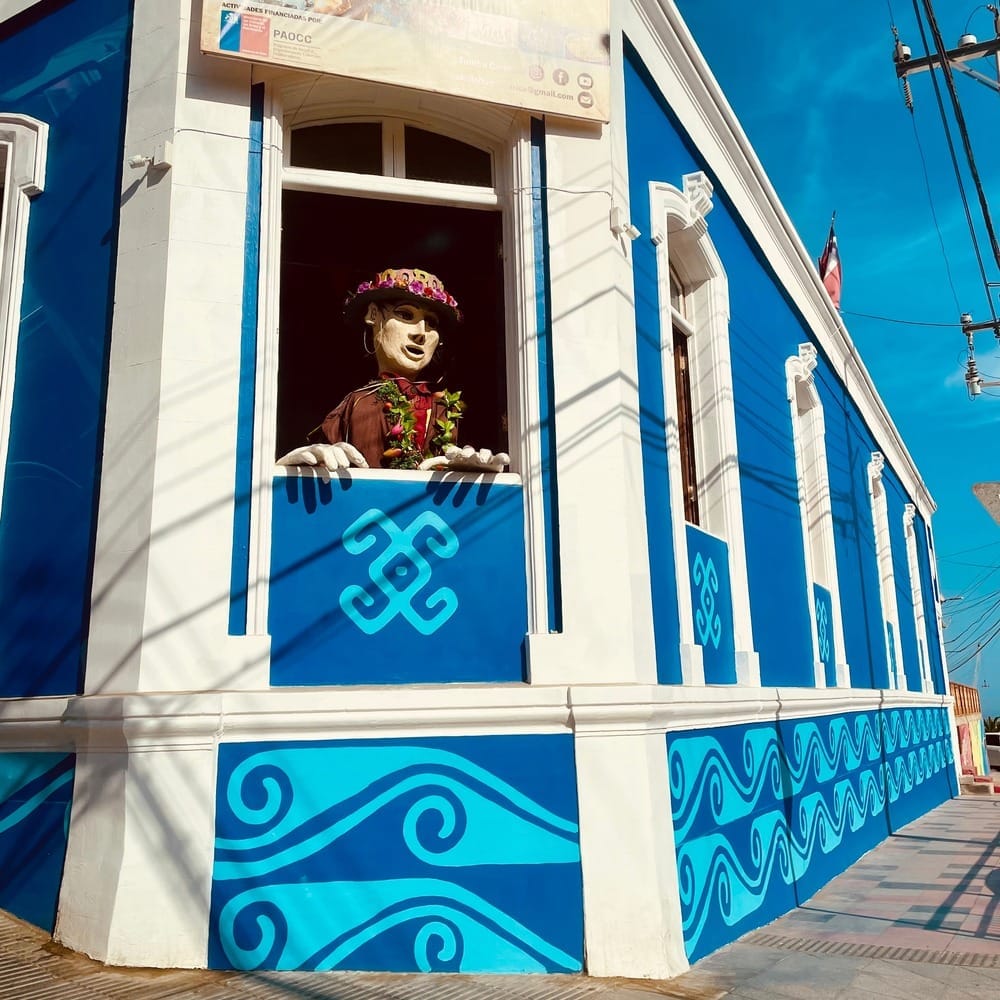
We stayed at the charming Apacheta hotel located on the sands of Playa Feliz and next to two of Arica’s popular beaches, La Lisera and El Laucho. This is a prime surf spot and attracts its fair share of travellers chasing the perfect wave. The hotel is made out of recycled shipping containers and has solid eco-credentials. The centre of Arica is a 15-minute walk north.
Dinner at El Arriero, known for its seafood and local dishes.
Top Tip: Try the Carmenere wine.
This is where I first tasted Carmenère – a wine I’ve had a soft spot for ever since (the name being so close to mine definitely helps!) Originally from Bordeaux, the grape all but disappeared in France after the phylloxera vine plague in the 1800s, when growers chose to replant easier varieties like Merlot instead.
Unbeknownst to many, Carmenère had already made its way to Chile with French vine cuttings. Protected by the Andes and Chile’s natural isolation, it thrived here, so much so that for years it was mistaken for Merlot. It wasn’t until 1994 that experts realised Chile had been quietly nurturing a grape almost lost to history. Today, Carmenère is one of Chile’s signature wines.
Day 7: Exploring Arica
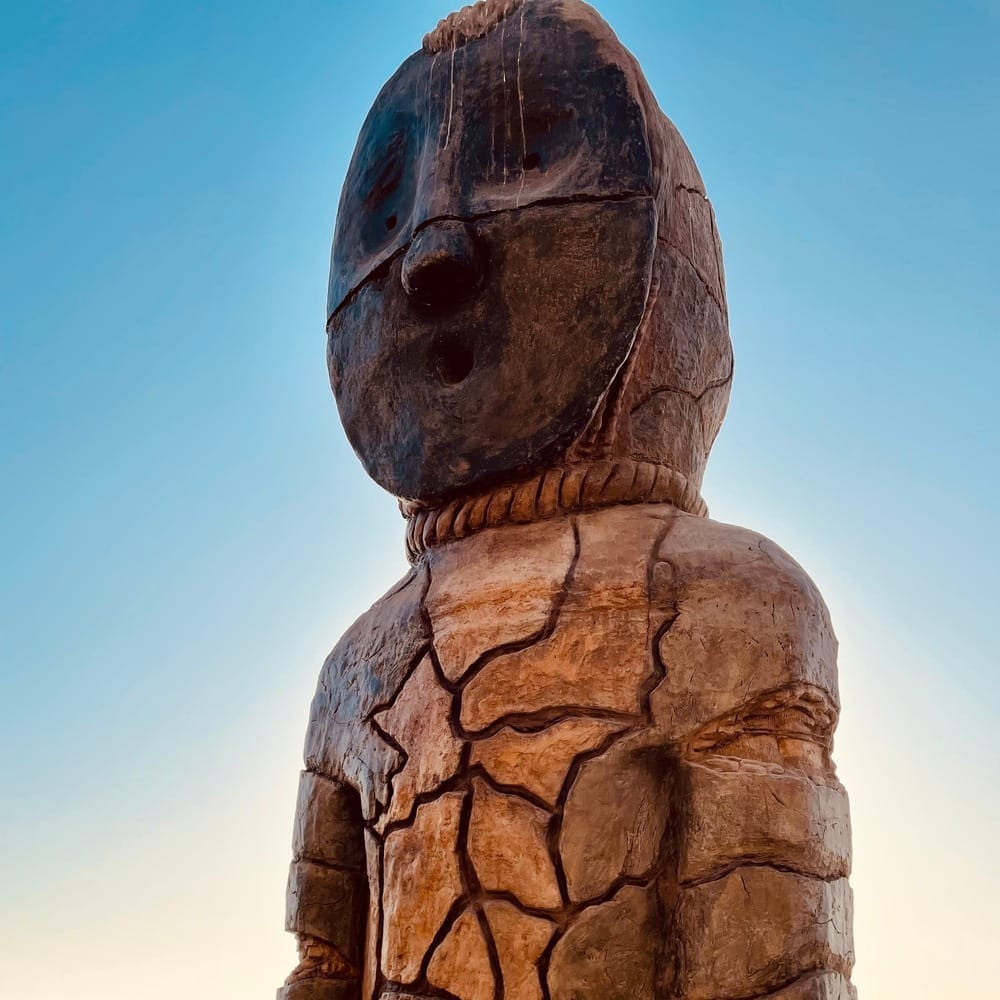
If you’re spending time in Arica, the Archaeological Museum of San Miguel de Azapa is well worth the visit. This is where you’ll see the Chinchorro mummies – the oldest artificially mummified human remains in the world, dating back thousands of years before the Egyptians. It’s fascinating, slightly haunting, and gives real depth to the history of northern Chile.
Back in the city, you can easily fill the afternoon wandering between a few of Arica’s key sights. Stop by the Cathedral de San Marcos, designed by Gustave Eiffel, then head to the Colón 10 Archaeological Site to see how layers of history sit right in the middle of modern Arica.
If the Chinchorro culture really captures your interest — and you have the time — consider taking a drive to Caleta Camarones, around two hours south of Arica. This small seaside village lies close to where some of the world’s oldest mummies were originally discovered. While the main exhibits are in Arica, being here gives you a much stronger sense of the landscape these ancient communities lived in and adapted to.
The coastline around Caleta Camarones is dramatic and beautiful, with steep cliffs, quiet beaches and wide-open views of the Pacific Ocean. It’s a great spot for photography, a gentle walk, or simply taking in how remote this stretch of Chile feels.
Back in Arica, finish the day with dinner at Maracuya Restaurant. It’s a relaxed place to unwind, with sea views and a menu focused on fresh seafood – the perfect end to a day that blends history, culture and coast.
Day 8: Arica to Patagonia (Coyhaique)
Fly from Arica to Coyhaique, the gateway to Patagonia, with a layover in Santiago before you head south. The flight itself gives you a fun transition – from desert peaks to rolling Patagonian hills – and by the time you land in Aysén, you’ll already feel like you’re entering a completely different world.
From Coyhaique, it’s a scenic drive down the Carretera Austral to Cerro Castillo, about 75 kilometres south. This little village is the perfect base for exploring the rugged beauty of Cerro Castillo and its surrounding national park, with dramatic peaks and hikes galore. We stayed in a cute B&B with phenomenal views of the mountains.
When evening rolls around and you’re ready for food and a comfy table, you could try one of the favourite local spots in Coyhaique, DaGus Restaurant – a friendly, highly rated place that locals and visitors both love. They do great Patagonia-style dishes, fresh ingredients and a relaxed vibe that feels just right after a long day on the road. Another excellent choice is Casa Ciprés, known for its creative takes on local flavours in a cosy setting, or La Mechada Patagona, which gets rave reviews for its hearty Patagonian fare and warm atmosphere.
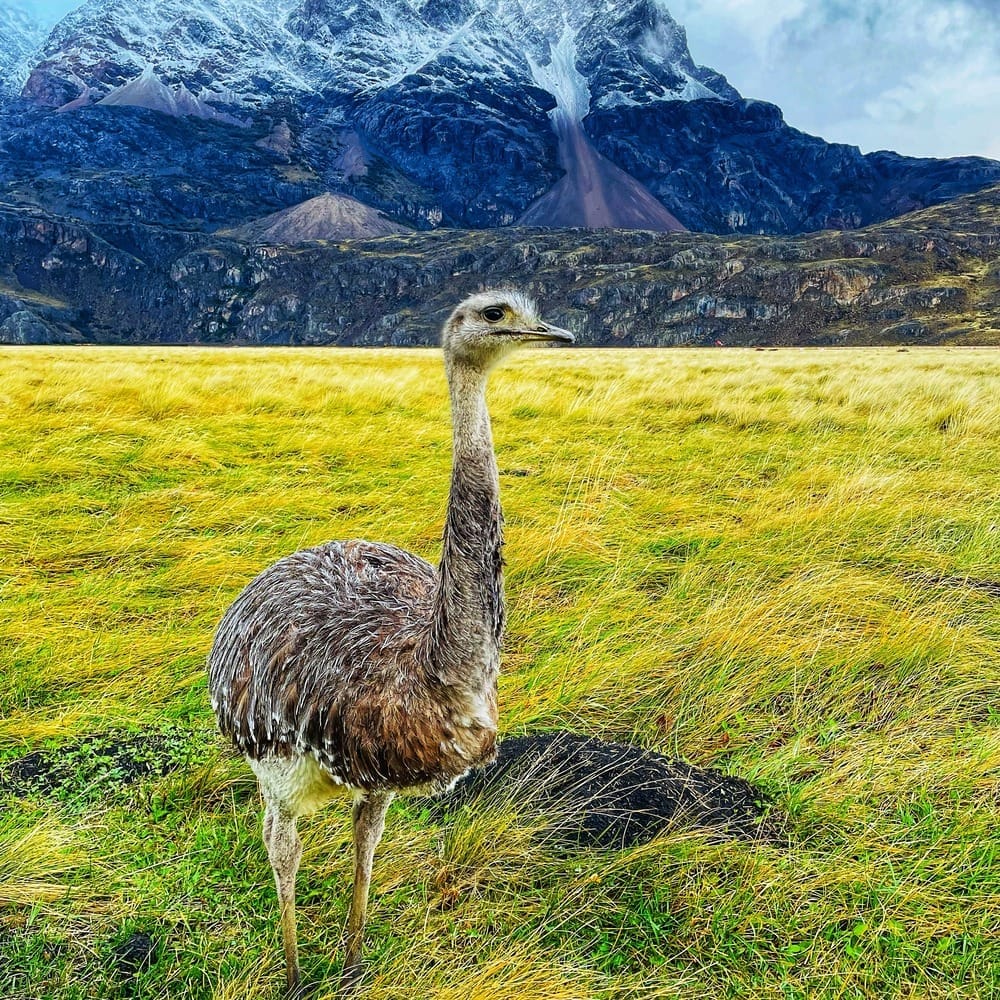
Day 9: Patagonia National Park and Valle Chacabuco
From Cerro Castillo, allow five to six hours to drive to Patagonia National Park, but plan for plenty of stops along the way, this is one of those journeys where the scenery is just as memorable as the destination.
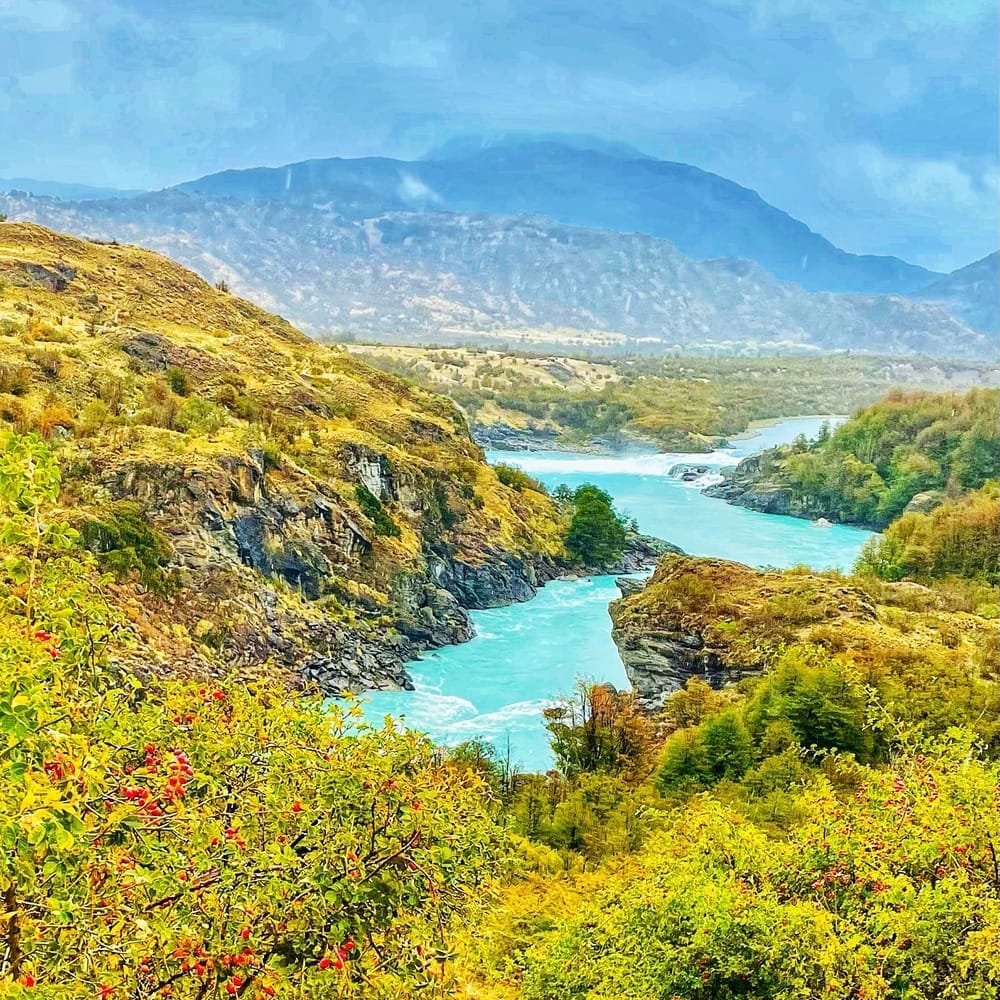
One place you shouldn’t rush past is the Baker River, Chile’s largest river by volume, famous for its striking turquoise colour created by glacial meltwater flowing down from the Northern Patagonian Ice Field. If you have the time, this area is worth lingering in; you could easily spend a full day walking along the riverbanks, taking photos, or simply watching the water rush past.
Once inside Patagonia National Park, staying at Explora Lodge Patagonia puts you right in the heart of the landscape, surrounded by wide valleys, rugged peaks and roaming wildlife. Being inside the park makes early mornings and quiet evenings especially rewarding.
If daylight allows, ease into the park with a guided hike that afternoon. Even a short walk gives you a sense of the park’s scale and introduces you to its wildlife and dramatic scenery, a perfect first taste of Patagonia.
Day 10: Exploring Patagonia National Park
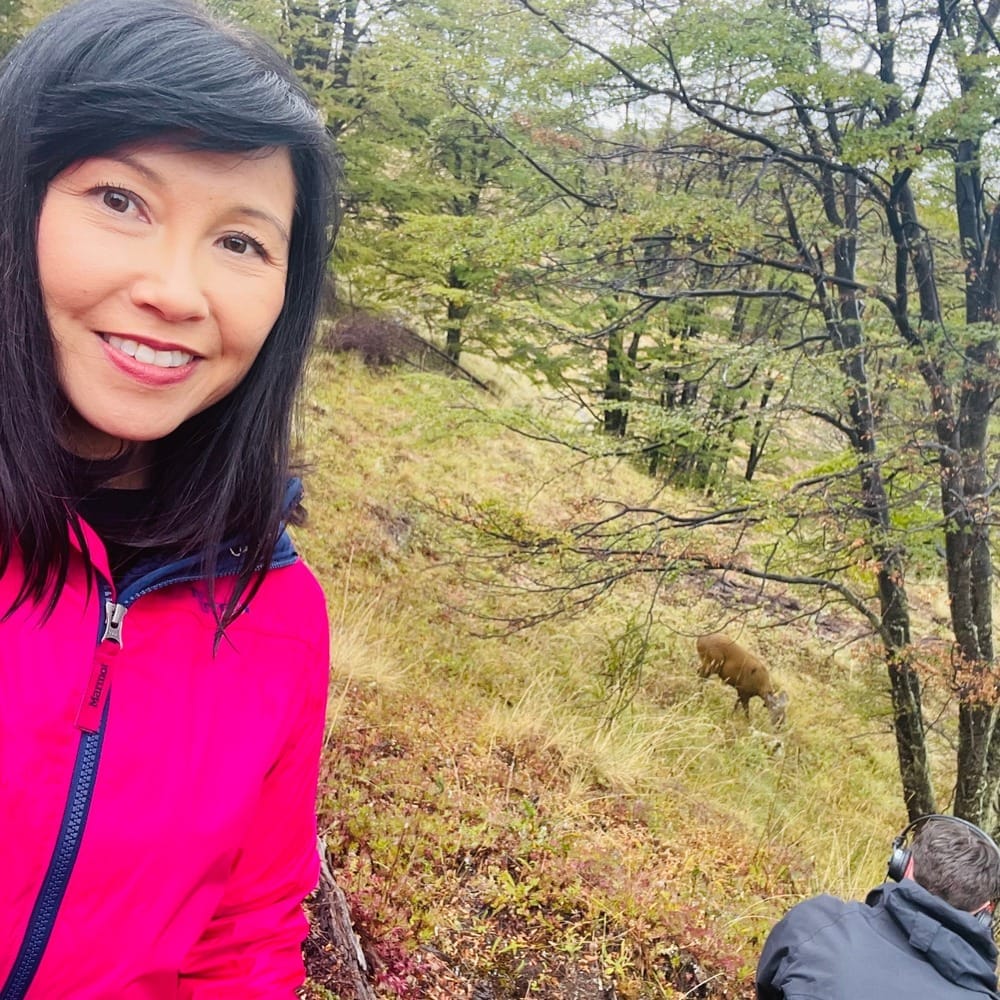
Spend a full day immersed in the wild landscapes of Patagonia National Park, one of Chile’s most remote and beautiful protected areas. Start the morning with a guided wildlife tour, a great way to spot some of the park’s most iconic species, including guanacos, the endangered huemul deer, and soaring Andean condors.
In the afternoon, head to Jeinimeni Lake, known for its striking turquoise waters and dramatic mountain backdrop. There are several well-marked hiking trails in this area, with options suitable for different fitness levels.
After a full day outdoors, return to your lodge to unwind and enjoy a hearty Patagonian-style meal. It’s the perfect way to end the day – warming up, resting tired legs, and taking in the quiet of Patagonia at its most serene.
Day 11: Departure from Patagonia
On your final morning in Patagonia National Park, enjoy a relaxed breakfast overlooking Valle Chacabuco, one of the park’s most scenic valleys and a fitting farewell to the Patagonian wilderness.
When it’s time to leave, allow around six hours for the overland transfer to Balmaceda Airport, the main airport serving this region of Chile. The drive is long but scenic, passing wide-open landscapes that offer one last look at Patagonia’s vast scale.
From Balmaceda, fly back to Santiago. Depending on your flight schedule, you may have time to explore more of the capital or continue directly on to your international departure home.
If you enjoyed this blog post, you might also like..
Tracking huemul deer in Chile
